Buyer's guide
Artificial Turf Roll in 2026: Sizes, Heavy Grades, and Shipping
An artificial turf roll costs $2 to $8 per square foot for the material in 2026. Here's how turf rolls differ from landscape grass rolls, what sizes they ship in, and how to handle a heavy one.
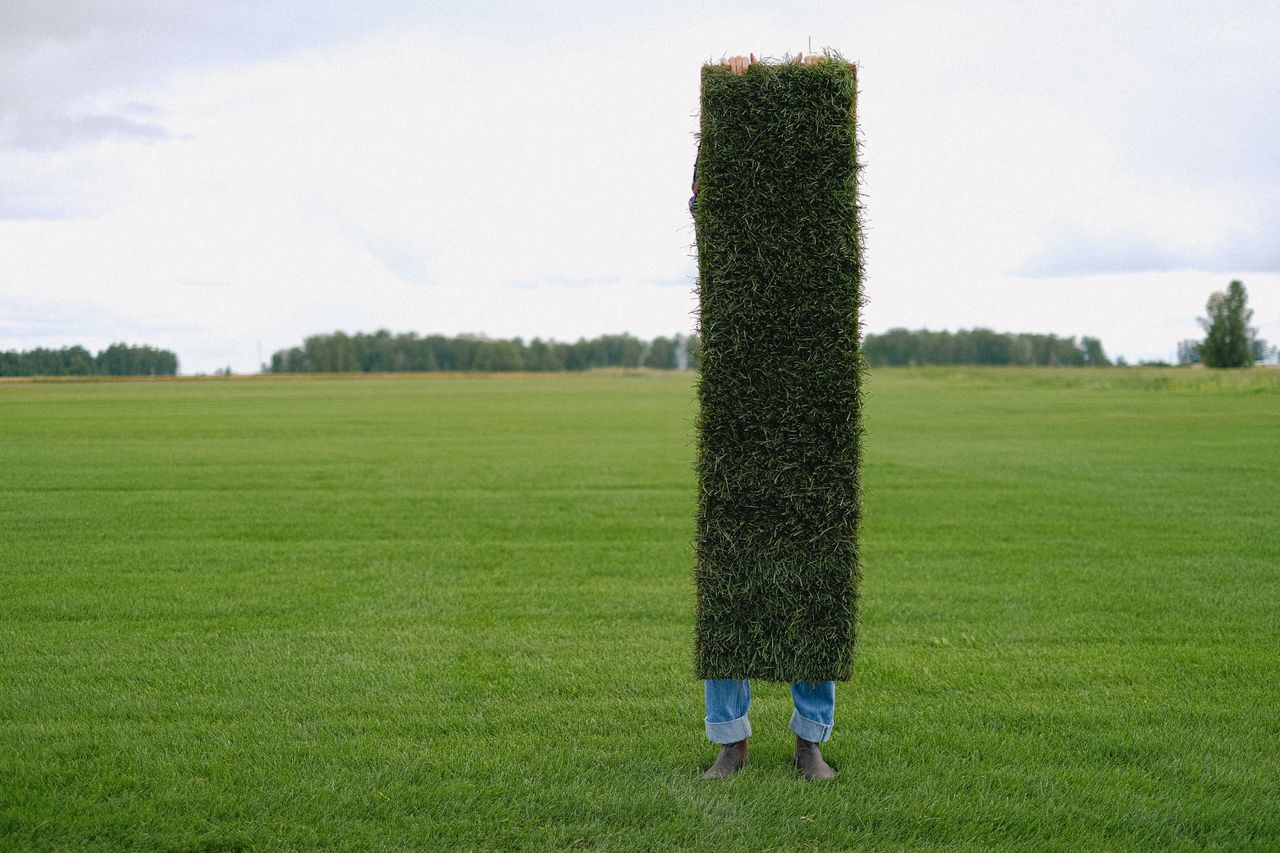
An artificial turf roll costs $2 to $8 per square foot for the material in 2026, with heavier sport and pet grades toward the top. Rolls ship in 15-foot widths cut to length, and a full roll is a heavy freight item, so many buyers order cut-to-length pieces instead of a whole roll.
Artificial turf roll (material) (per sq ft)
Material only. Heavier pet and sport grades sit toward the top. Figures verified July 2026.
What does an artificial turf roll cost?
An artificial turf roll costs $2 to $8 per square foot for the material in 2026, and heavier pet and sport grades sit toward the top of that band, around $4 to $8, verified against LawnStarter, HomeGuide, and InstallArtificial data in July 2026. A standard landscape roll runs $3 to $5. The word “turf” often signals the heavier end of the same product family, so a turf roll and a grass roll overlap in price but not always in build.
| Roll type | Cost per sq ft | Built for |
|---|---|---|
| Budget landscape (polypropylene) | $2–$6 | Low-traffic, decorative, shaded areas |
| Standard landscape (polyethylene) | $3–$5 | Most backyard lawns |
| Pet-rated | $4–$8 | Dogs, odor control, fast drainage |
| Sport / nylon | $5–$8 | High traffic, putting greens, play surfaces |
The premium for a pet or sport roll buys heavier fibers, a denser tuft, and a backing that clears water faster. On an installed pet lawn, that premium works out to about $2 to $4 more per square foot than a standard landscape install.
How is a turf roll different from a grass roll?
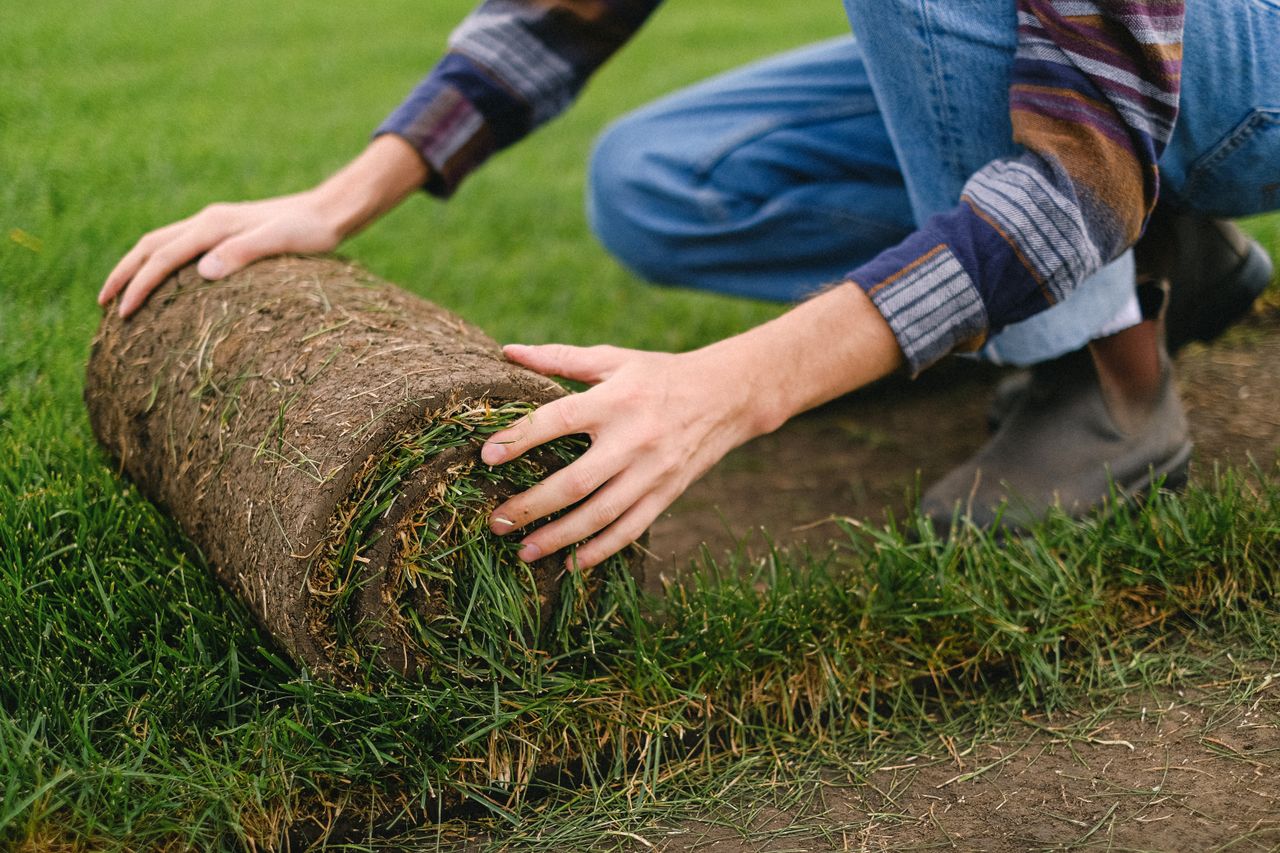
Mostly weight, density, and drainage, not the basic idea. If you’re pricing a plain backyard lawn, start with the lighter landscape rolls on the artificial grass rolls page; this page is for the heavier stuff. Here’s the split so you buy the right one.
- A landscape grass roll is tuned to look like a lawn: medium pile, moderate face weight, polyethylene fiber, priced for coverage.
- A turf roll in the heavier sense leans toward performance: higher face weight, denser tufting, a shorter and tougher pile for sport surfaces, and a perforated or fully permeable backing rated for pet or play use.
The two overlap enough that sellers use the words interchangeably, so read the specs rather than the label. If the listing brags about color and hides the face weight and drainage rate, treat it as a landscape roll no matter what it’s called.
What sizes do artificial turf rolls come in?
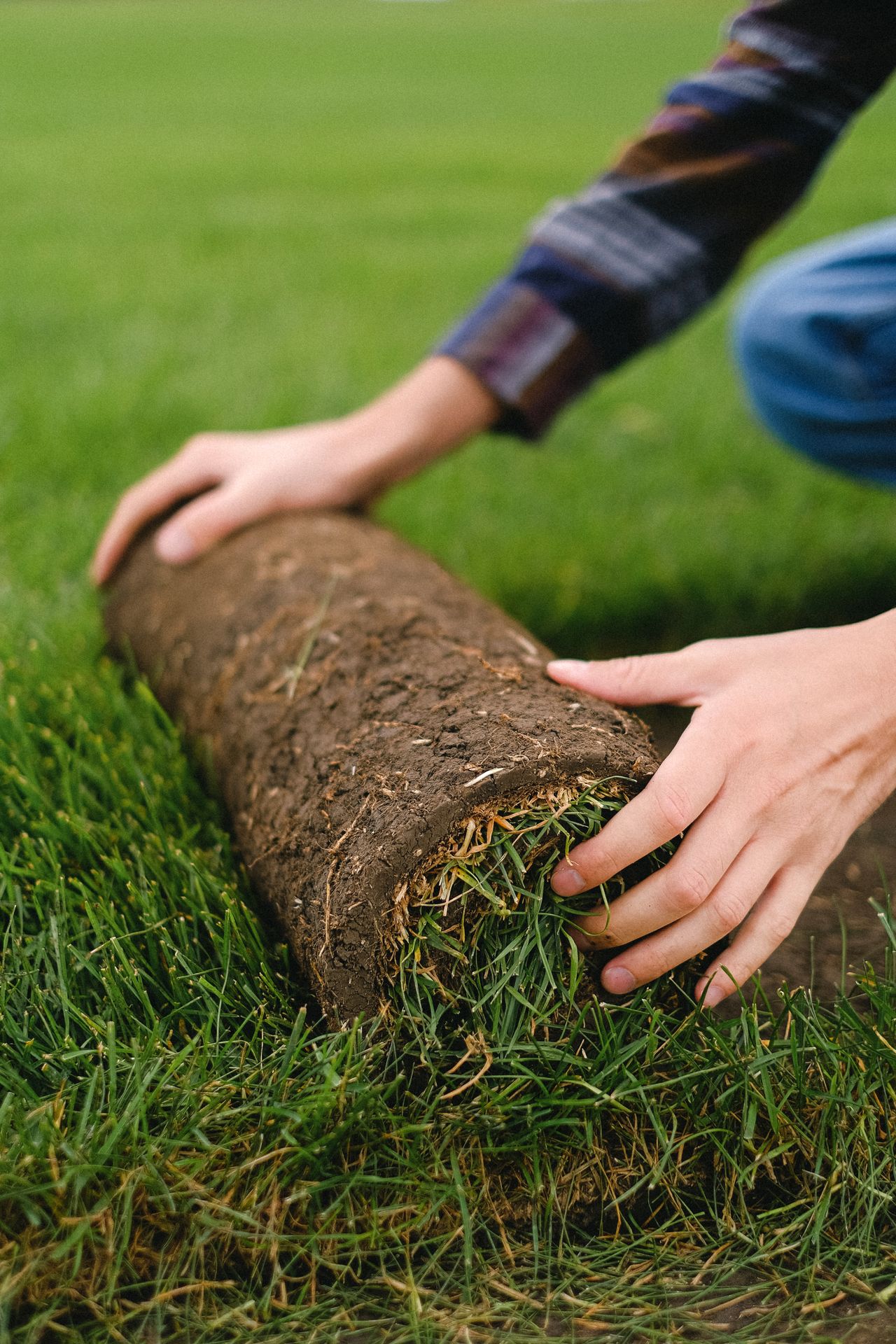
The common width is 15 feet, with 6-foot rolls sold for narrow runs and easier handling. Length is cut to order, so you buy by the square foot but in whole widths. A 15-foot roll covers 15 square feet per linear foot; a 6-foot roll covers 6.
Fixed widths mean two things for a turf job. Any area wider than the roll needs a seam where two widths meet, and heavier rolls are stiffer, which makes a clean seam a little harder. Plan the layout so seams fall in low-visibility spots, and keep every blade running the same direction across a seam so the join disappears. Add 5 to 10 percent to your measured area for cuts and waste, since a turf roll has a grain and can’t be rotated freely.
How do you handle and ship a heavy roll?
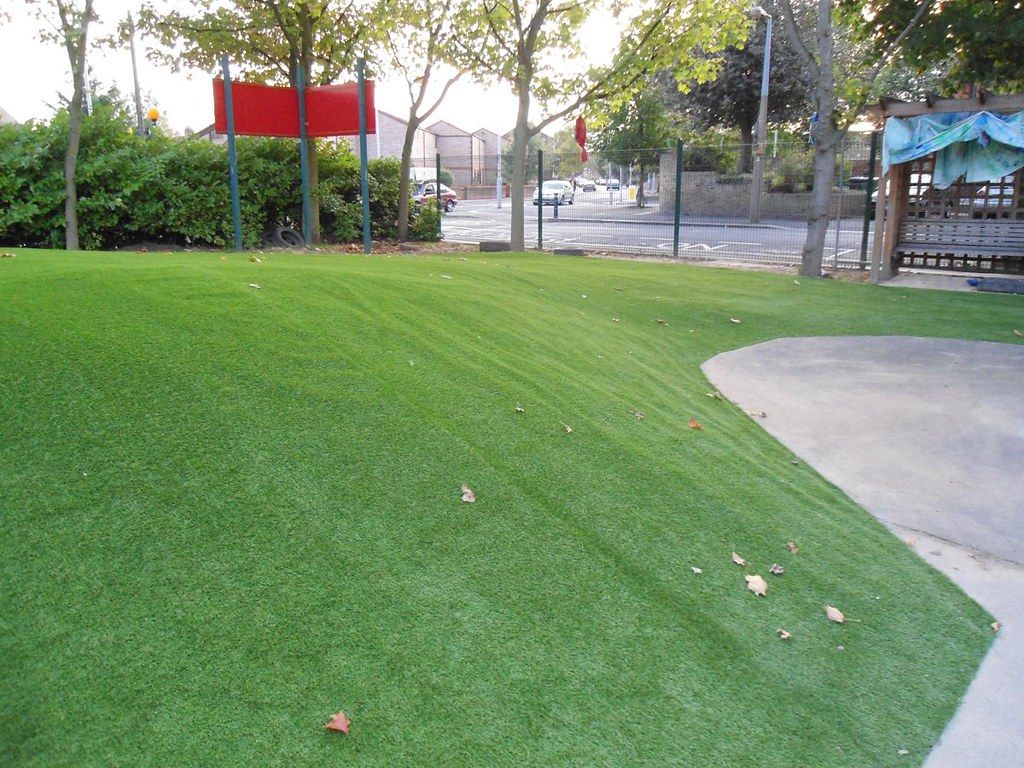
This is where a turf roll differs most from a light landscape one. A full 15-foot roll is heavy, often several hundred pounds depending on face weight, and it ships oversized. That usually means LTL freight on a pallet with a delivery appointment, and sometimes you unload it yourself. Budget for that in both time and cost.
Because of the weight, many buyers order cut-to-length pieces instead of a full roll:
- Cut-to-length gives you the exact footage, lighter handling, and sometimes ground shipping. The trade-off is you commit to your measurements up front, so measure carefully and add waste.
- A full roll is better when you have a large area, want extra on hand for repairs, or are covering several projects. Just plan the freight delivery and have a second person and a cart ready.
Either way, cutting is done from the back with a sharp blade along the stitch rows, not from the top. For the full installed picture once the roll is down, the artificial grass installation cost page has the layer-by-layer money breakdown, and the turf cost calculator turns your footage into a number.
Which turf roll for pets or sport?
For a dog lawn, the roll matters less than the drainage and infill that go with it. Pick a pet-rated roll with a permeable backing and a stated drainage rate, then pair it with a zeolite or antimicrobial infill that controls odor, roughly $0.30 per square foot more than plain silica. For a putting surface or a hard-use play area, a shorter-pile nylon roll holds up where a tall landscape pile would flatten.
The heavier the roll and the harder the use, the more the base underneath earns its keep. A dense sport roll on a thin base still ripples; the roll is only as good as what it sits on.
One practical tip: order pet and sport rolls a little long. Dogs wear a favorite path and play surfaces take repair over time, so a few extra feet of matching roll from the same dye lot saves you from a visible mismatch later. Rolls from different production runs can vary slightly in shade, and a patch that doesn’t match is worse than the wear it covers.
The bottom line
Budget an artificial turf roll at $3 to $5 per square foot for a standard landscape grade and $4 to $8 for pet or sport rolls, material only. Buy in whole 15-foot widths, add 8 to 10 percent for waste, and decide early between a full roll (large jobs, freight delivery) and cut-to-length pieces (lighter handling, exact footage). If your project is a plain backyard lawn, the lighter rolls on the artificial grass rolls page are the better starting point.
The turf-roll job kit
As an Amazon Associate, MowFree earns from qualifying purchases.
A heavier turf roll wants a matching infill and a solid set of fasteners. This is the material list for laying a sport or pet-grade roll over a prepared base.
- View on Amazon
Artificial turf roll (heavy / pet grade)
The main buy. Pet and sport rolls use denser fibers and a faster-draining backing than a landscape roll.
~$4–$8 / sq ft
- View on Amazon
Zeolite / antimicrobial pet infill
Controls odor and drains fast on a dog lawn. Runs about $0.30 per square foot more than plain silica.
~$22–$25 / 50 lb bag
- View on Amazon
Seaming tape and turf glue
Joins roll widths into one surface. A heavier roll makes a clean seam harder, so buy enough.
- View on Amazon
Galvanized turf nails / staples
Pin the perimeter and seams. Heavier rolls need more fasteners to sit flat.
- View on Amazon
Power broom / stiff brush
Stands the dense fibers back up after infill. A hand brush works on small areas.
A few more questions
- Does a full turf roll ship by freight or ground?
- A full 15-foot-wide roll is oversized and heavy, so it usually ships by LTL freight on a pallet, not standard ground. That means a delivery appointment and, often, unloading it yourself. Cut-to-length pieces are lighter and sometimes ship ground, which is one reason buyers order them instead of a whole roll.
Sources
Every price on this page was checked against these sources on the date shown. We re-verify quarterly.
- LawnStarter: Artificial Grass Cost (2026): Material per-square-foot pricing, verified 2026-07-17
- HomeGuide: Artificial Grass Cost (2026): Per-fiber material ranges, verified 2026-07-17
- InstallArtificial: Pet Turf Cost (2026): Pet-grade turf premium and infill, verified 2026-07-17
- The Home Depot: Cost to Install Artificial Grass: Retail roll and install pricing, verified 2026-07-17