Cost guide
Synthetic Grass Cost (2026): Fibers, Grades, and What Drives Price
Synthetic grass costs $2 to $8 per square foot for the material in 2026. Fiber type sets the range: polypropylene, polyethylene, or nylon. Here's how grade drives the price.
Synthetic grass costs $2 to $8 per square foot for the material in 2026, driven mostly by the fiber: polypropylene $2 to $6, polyethylene $3 to $5, nylon $5 to $7. Pile height, face weight, and blade density push it within those bands. Installed, the finished lawn runs $8 to $22.
Synthetic grass (per sq ft)
Material by fiber; $8–$22 installed. Figures verified July 2026.
What does synthetic grass cost?
Synthetic grass costs $2 to $8 per square foot for the material in 2026, driven mostly by the fiber: polypropylene $2 to $6, polyethylene $3 to $5, and nylon $5 to $7. Pile height, face weight, and blade density push it within those bands. Installed, the finished lawn runs $8 to $22. These figures are verified against HomeGuide, LawnStarter, and InstallArtificial cost data in July 2026.
This page is about the material itself, the roll before a crew ever touches it. If you want to understand why one synthetic grass costs twice as much per foot as another sitting right next to it on the rack, the answer is grade, and grade comes down to a handful of specs. Let’s go through them.
What are synthetic grass fibers made of?
Almost all synthetic grass uses one of three plastics for the blades, and the choice sets the base price more than anything else.
| Fiber | Material cost per sq ft | Character | Best for |
|---|---|---|---|
| Polypropylene | $2–$6 | Cheapest, softens in high heat, less rugged | Budget, shade, decorative, low traffic |
| Polyethylene | $3–$5 | Soft, natural look, good all-round durability | Most landscape lawns, family yards |
| Nylon | $5–$7 | Stiffest, most durable, best heat tolerance | Putting greens, high-traffic, play areas |
Polypropylene is the value fiber. It’s fine for a shaded strip or a decorative border, but it goes limp in real heat and wears faster under foot traffic, so it’s a poor pick for a lawn the kids actually use. Polyethylene is the middle child and the right starting point for most people, because it looks the most like real grass and handles normal use. Nylon is the workhorse, the stiff, heat-tolerant fiber you pay up for when the surface takes a beating or has to putt true. Many premium landscape turfs blend polyethylene blades with a nylon thatch layer to get the look of one and the resilience of the other.
How do pile height, face weight, and density drive price?
Fiber sets the band. Three build specs move the price inside it, and they’re worth knowing before you shop.
- Pile height is how long the blades are. Taller pile looks lush but lies over under traffic and needs more infill to stand up. Shorter, denser pile stays upright and putts better, which is why putting turf is short and play turf sits in the middle.
- Face weight is the amount of yarn per unit area, usually given in ounces per square yard. More yarn means a plusher, more durable, more expensive lawn. It’s the single spec most closely tied to a higher roll price, because you’re literally buying more plastic per foot.
- Density is how tightly the blades are stitched in. Higher density hides the backing, feels fuller, and holds up longer, and it costs more for the same reason face weight does.
Put simply, a heavier, denser roll costs more because there’s more material in it, and it usually lasts longer for the same reason. A thin, light, tall-pile budget turf is cheap up front and the first to go flat. The spec sheet on any decent roll lists these numbers; read them, don’t just eyeball the color.
Synthetic turf cost
“Synthetic turf cost” and “synthetic grass cost” are the same thing. Turf and grass get used interchangeably across suppliers, and neither word tells you whether a quote is material or installed. The material ranges hold either way: $2 to $8 per square foot depending on fiber and grade.
The number that changes is installed versus material. Synthetic turf as a finished lawn runs $8 to $22 per square foot once you add base, infill, and labor, with most jobs at $12 to $15. The roll is the minority of that. So when a synthetic turf supplier quotes “$4 a foot,” that’s the material grade you’re reading about on this page, not the installed lawn. The artificial grass cost page pulls that distinction apart in full.
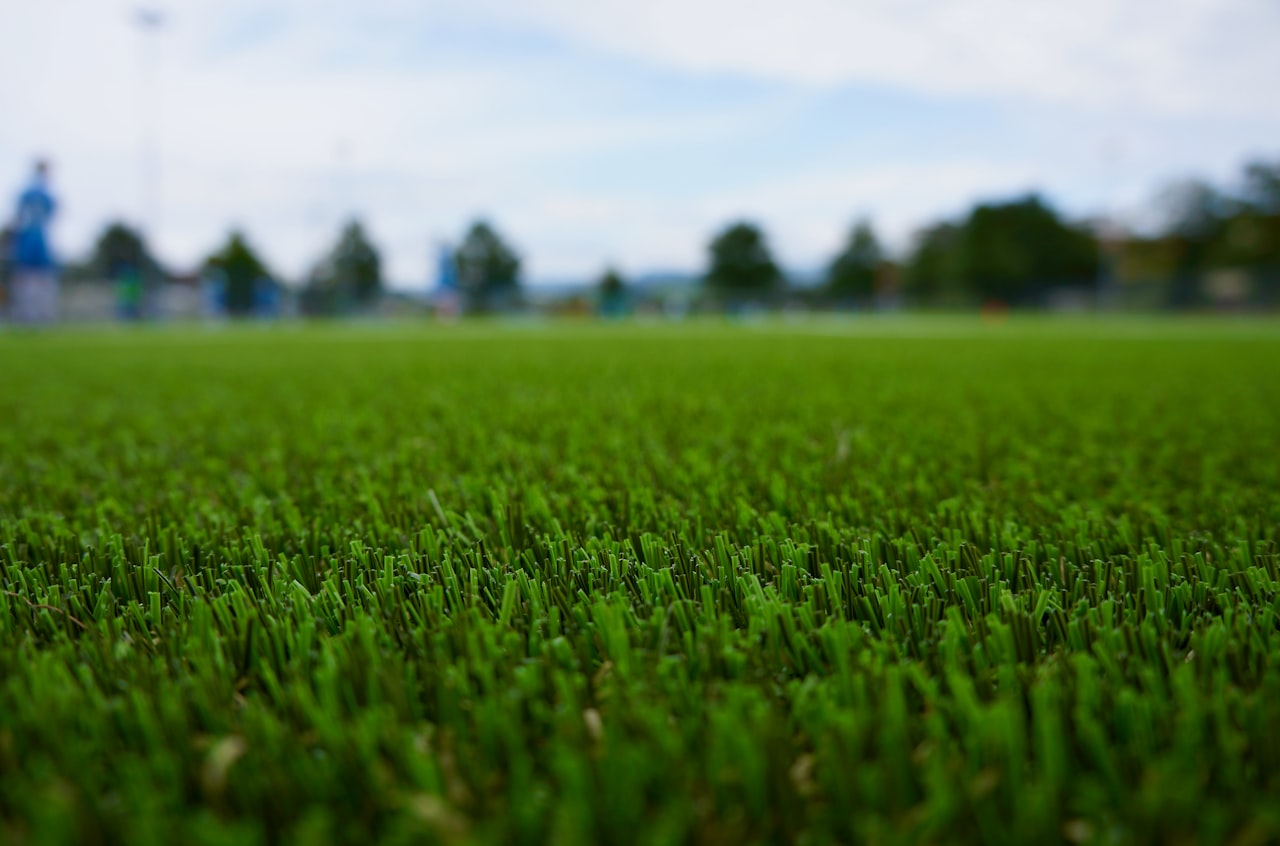
Which grade should you buy?
Match the fiber and build to the use, not to the showroom sample that feels nicest in your hand:
- Decorative or low-traffic area: polypropylene or a light polyethylene. Save the money where nobody’s walking.
- Normal family lawn: mid-weight polyethylene with a solid face weight and density. The default, and where most people land.
- Pets: heavier polyethylene with a fast-draining backing, plus antimicrobial infill, which adds about $0.30 per square foot over plain silica.
- Putting or heavy play: nylon, short dense pile. It costs the most per foot and earns it on those surfaces.
Buying too much grade for a quiet corner wastes money; buying too little for a busy yard means replacing it years early. The middle of the polyethylene band satisfies most yards.
The bottom line
Synthetic grass material runs $2 to $8 per square foot in 2026, set by fiber (polypropylene cheapest, nylon priciest) and tuned by pile height, face weight, and density. The finished, installed lawn is $8 to $22 per square foot. Read the spec sheet, match the grade to how the area gets used, and keep the roll price separate from the install price in your head. For the full installed breakdown, see artificial grass installation cost, and turn your square footage into a number with the turf cost calculator.
Shopping the material yourself
As an Amazon Associate, MowFree earns from qualifying purchases.
If you're buying the roll direct and grading your own base, these are the pieces that matter most for a spec-driven DIY job. Prices are material only.
- View on Amazon
Polyethylene turf roll (landscape grade)
The all-round fiber. Soft, natural-looking, the right default for most lawns.
~$3–$5 / sq ft
- View on Amazon
Nylon turf (high-traffic / putting)
The durable, heat-tolerant fiber for play areas and greens. Priciest per foot.
~$5–$7 / sq ft
- View on Amazon
Silica sand infill
Stands the blades up and holds pile height. Heavier pile wants more infill.
~$0.60–$1.10 / sq ft
- View on Amazon
Crushed aggregate base
The compacted drainage layer, 3–4 inches deep, under any grade of turf.
~$1.20–$2.25 / sq ft
- View on Amazon
Turf seaming tape and glue
Joins roll edges. Match the seam to the pile direction for an invisible line.
A few more questions
- Does higher face weight always mean better turf?
- Not by itself. Face weight measures yarn per area, so more can mean a plusher, more durable lawn, but a heavy pile with weak backing or the wrong fiber still fails early. Read backing quality, fiber type, and warranty alongside face weight, not the ounce number alone.
Sources
Every price on this page was checked against these sources on the date shown. We re-verify quarterly.
- HomeGuide - Artificial Grass Cost (2026): Fiber pricing and material ranges, verified 2026-07-17
- LawnStarter - Artificial Grass Cost (2026): Material-only and installed ranges, verified 2026-07-17
- InstallArtificial - Artificial Grass Installation Cost (2026): Turf grade and per-layer costs, verified 2026-07-17